When most antidetect browsers were just appearing on the market, Dmytro Momot — known under the pseudonym Vektor T13 — was already researching identification system vulnerabilities and building tools to bypass digital fingerprints. Behind him are 17 years in cybersecurity, a doctoral program at Leiden University, presentations at international conferences, and a journey from a solo developer to the creator of the Detect Expert ecosystem. This is not a faceless marketing project — this is the story of a specific expert with a verifiable reputation.
From Browser Antidetect to Understanding Its Limits
It all started in the late 2000s. Dmytro Momot was analyzing client-server systems, studying mechanisms by which web services recognize and track users. At the time, the concept of "browser digital fingerprint" was familiar only to a narrow circle of researchers.
The first solutions were browser-based — spoofing Canvas, WebGL, User-Agent, manipulating JavaScript objects. It worked: sites saw each profile as a separate user. But Dmitry quickly encountered a systemic limitation.
Why Browser Antidetect Hits a Ceiling
The browser approach spoofs data within one layer — the browser itself. But modern anti-fraud systems analyze much deeper:
- Fonts and rendering — depend on the operating system, not the browser
- Hardware parameters — CPU, GPU, memory size remain real
- System artifacts — timezone, keyboard layout, OS language packs
- Behavioral markers — mouse movement patterns, typing speed
When the browser says "I'm on a MacBook in Berlin" but the system layer reveals a Windows server in Moscow — anti-fraud detects inconsistency between layers. These contradictions became the main reason for bans that browser antidetect users couldn't explain.
Dmitry understood this before the market did. And instead of endlessly increasing the number of spoofed parameters in the browser, he changed the architectural approach.
Transition to Virtualization: A Different Antidetect Philosophy
In the early 2010s, Vektor T13 began developing an antidetect system based on virtual machines (VM). The idea was fundamentally different: instead of deceiving a site inside the browser, create a complete digital environment that doesn't need to be faked.
How It Works
Each profile is a separate virtual machine with its own operating system, driver set, fonts, and system settings. The browser inside such a VM honestly reports what it sees — because the entire environment around it is already configured correctly.
| Parameter | Browser Antidetect | VM Antidetect (Vektor T13) |
|---|---|---|
| Spoofing Level | Browser only (JS, Canvas, WebGL) | Entire system: OS, drivers, hardware |
| Fingerprint Consistency | Partial — conflicts between layers possible | Full — all layers are non-contradictory |
| System Fonts | Real host system fonts | Guest OS fonts |
| Hardware Fingerprint | Real host machine hardware | Virtualized equipment |
| Profile Isolation | At browser storage level | Full OS-level isolation |
| Resource Usage | Low — hundreds of profiles on one PC | Higher — each VM needs CPU, RAM, disk |
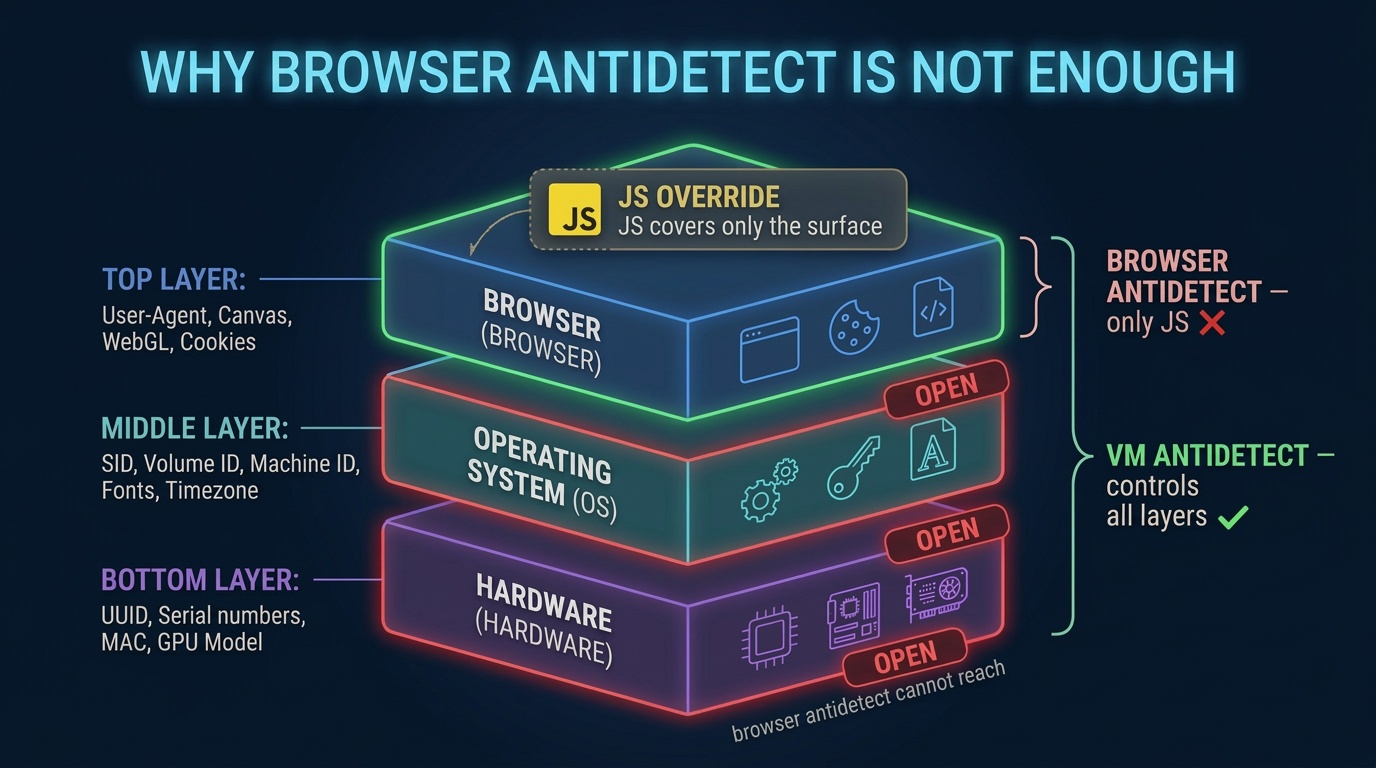
This approach doesn't replace browser antidetect — it solves different problems. Where mass scale and speed are needed, browser solutions remain effective. But where ad accounts, payment systems, and account verification are at stake — the VM approach provides a fundamentally different level of resilience.
Antidetect System: From Concept to Product
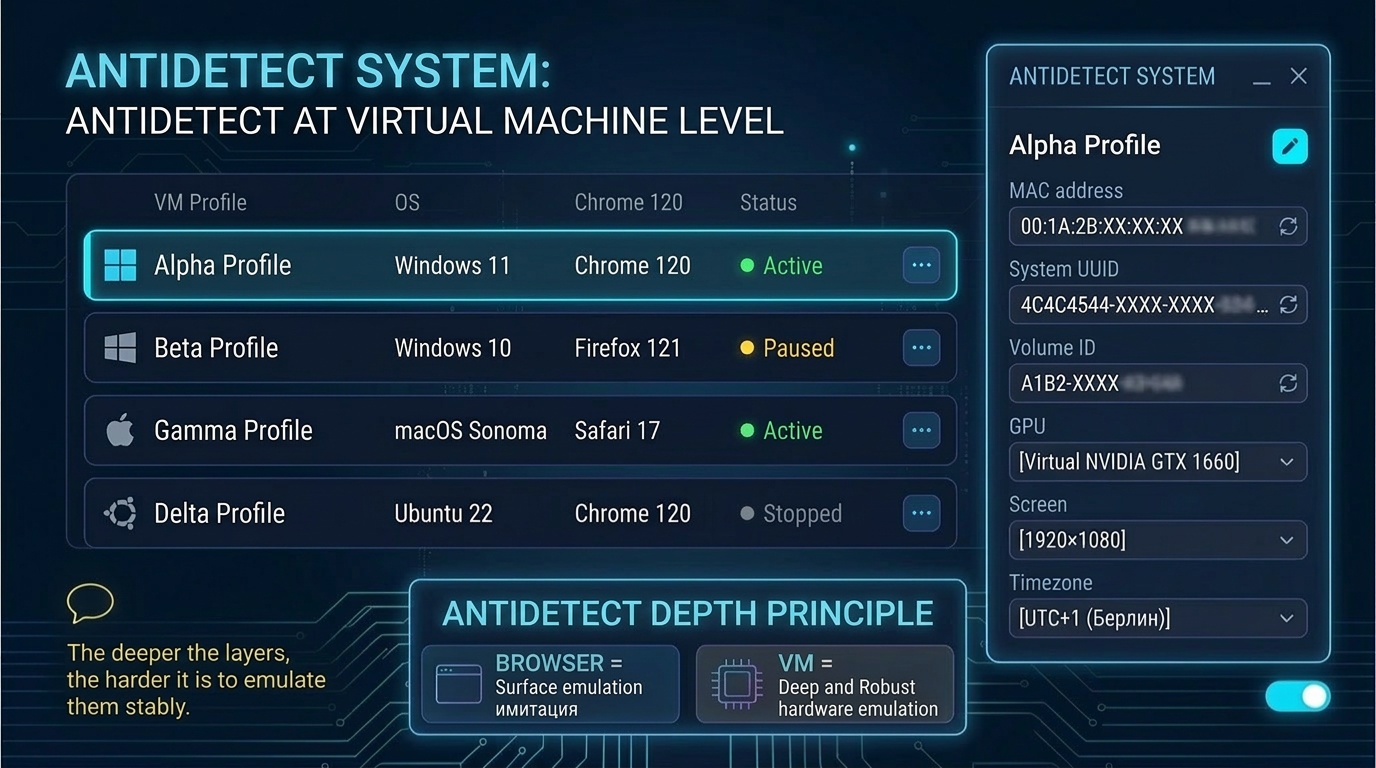
Based on his research, Dmitry created Antidetect System — an antidetect platform based on VirtualBox. This wasn't "yet another multi-accounting program." It was a product that grew from real research into how exactly anti-fraud systems identify users.
Key Platform Features
- Hypervisor-level isolation — each environment is completely independent
- Hardware and system fingerprint management — from MAC address to disk identifiers
- Minimizing correlations between sessions — different VMs are not linked
- Resistance to behavioral and network analysis — both static and dynamic parameters are accounted for
The platform is hosted at antidetect.online and continues to evolve. But Dmitry didn't stop at one product.
Detect Expert: Ecosystem Instead of a Single Tool
Over time, it became clear that antidetect is only part of the equation. Users need not only fingerprint spoofing but also tools for risk analysis, infrastructure verification, and understanding how anti-fraud systems see them.
This is how Detect Expert was born — an ecosystem combining several directions:
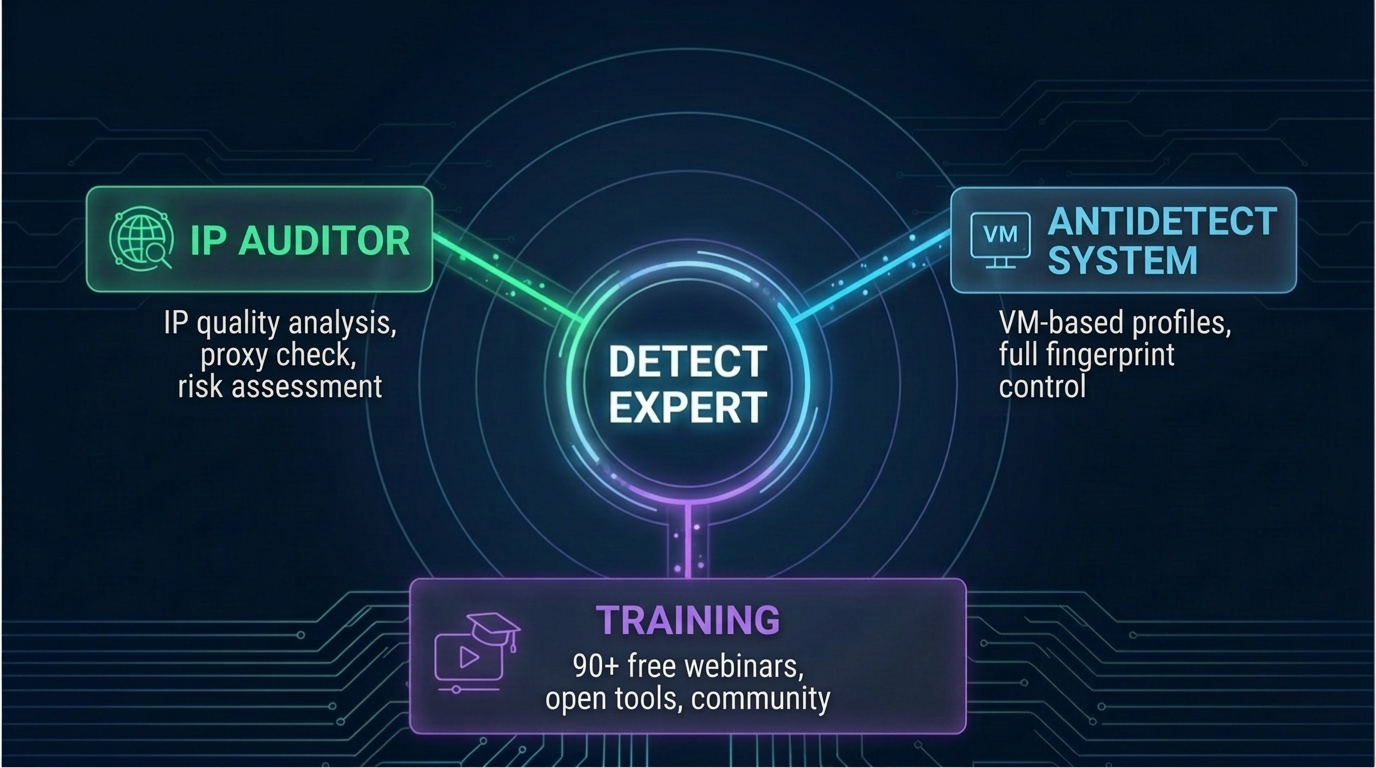
IP Auditor
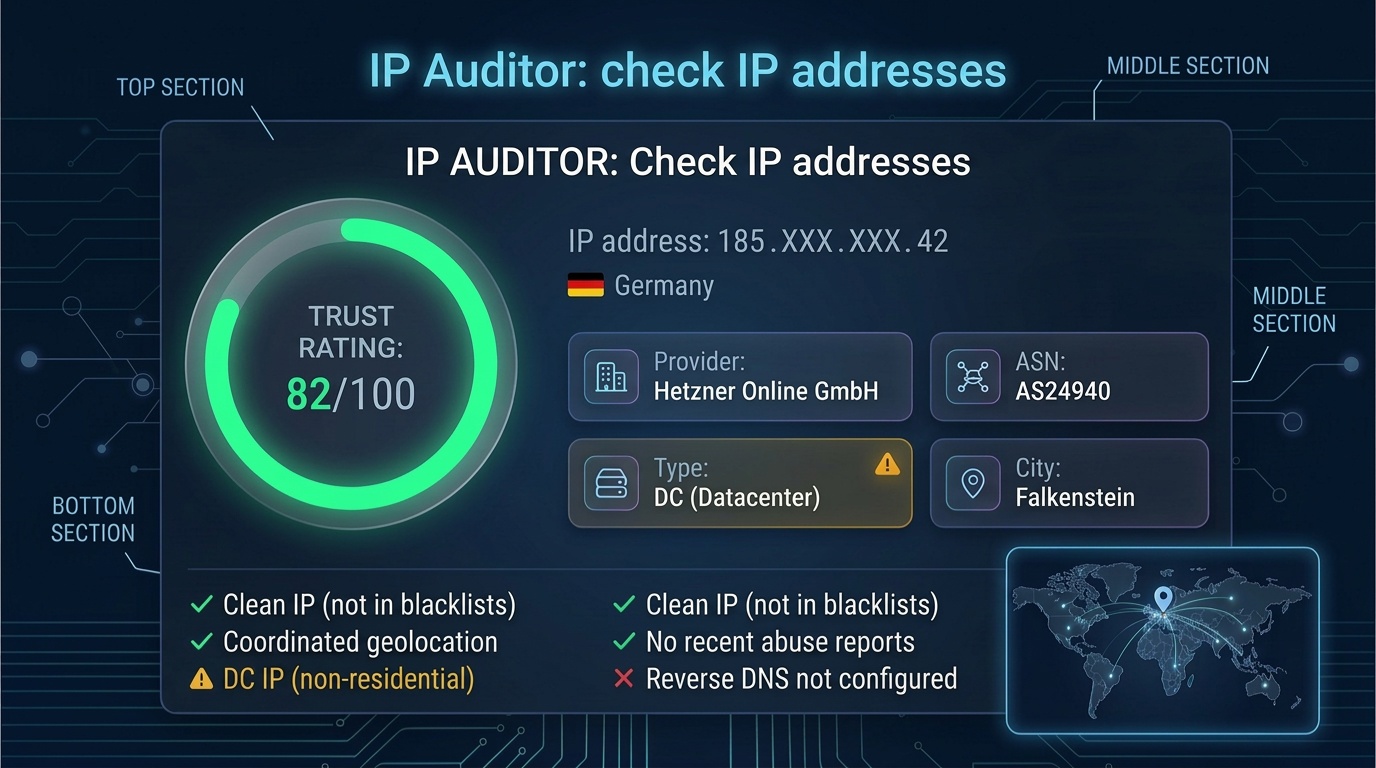
A professional tool for IP address and network reputation analysis. It allows you to:
- Assess the trust level of an IP address
- Identify anomalies and compromise indicators
- Support anti-fraud solutions at the network level
Used as a standalone analytical tool and as part of comprehensive Detect Expert systems.
Research and Educational Content
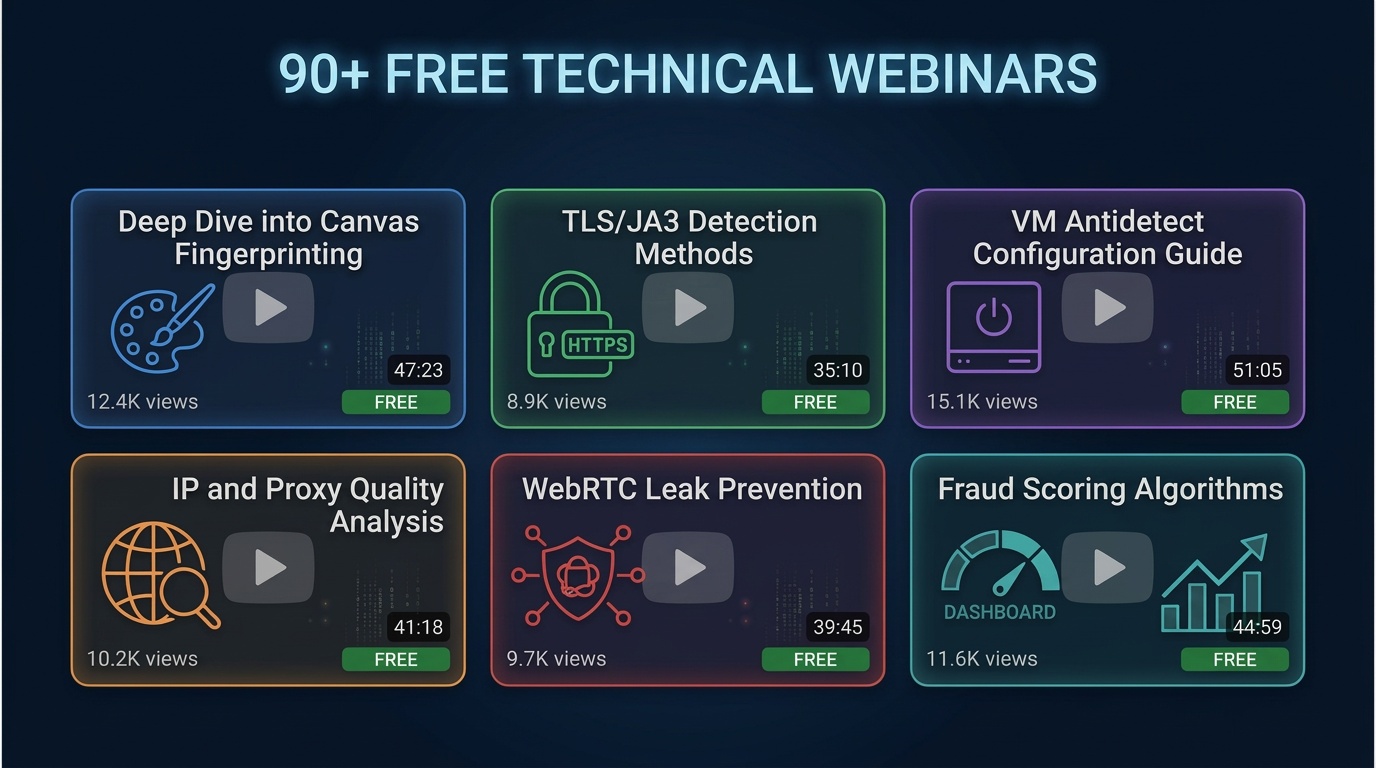
Over 90 webinars — these are not marketing presentations but technical deep-dives:
- How specific anti-fraud systems work
- Which parameters are checked and in what order
- Where browser antidetect fails and why
- How to properly configure environments for different tasks
Webinars are available for free — this is Dmitry's principled position. He views openness and education as the foundation of trust in the community.
Open Source and Free Version
Unlike most commercial antidetect solutions, Detect Expert provides:
- A free version of the product — for getting acquainted and basic tasks
- Open source components — for community review and audit
This is rare in a niche where most solutions are closed and paid from day one. Vektor T13 bets on transparency: if the product truly works, it doesn't need to be hidden behind a paywall.
Biography and Expertise: Not Just a "Startup Founder"
Behind the project stands not an anonymous team or a marketing brand, but a specific specialist with a verifiable track record.
Education
- Master's — V.N. Karazin Kharkiv National University
- Master's — Ukrainian Engineering Pedagogical Academy (Kharkiv)
- Postgraduate — Ukrainian Engineering Pedagogical Academy
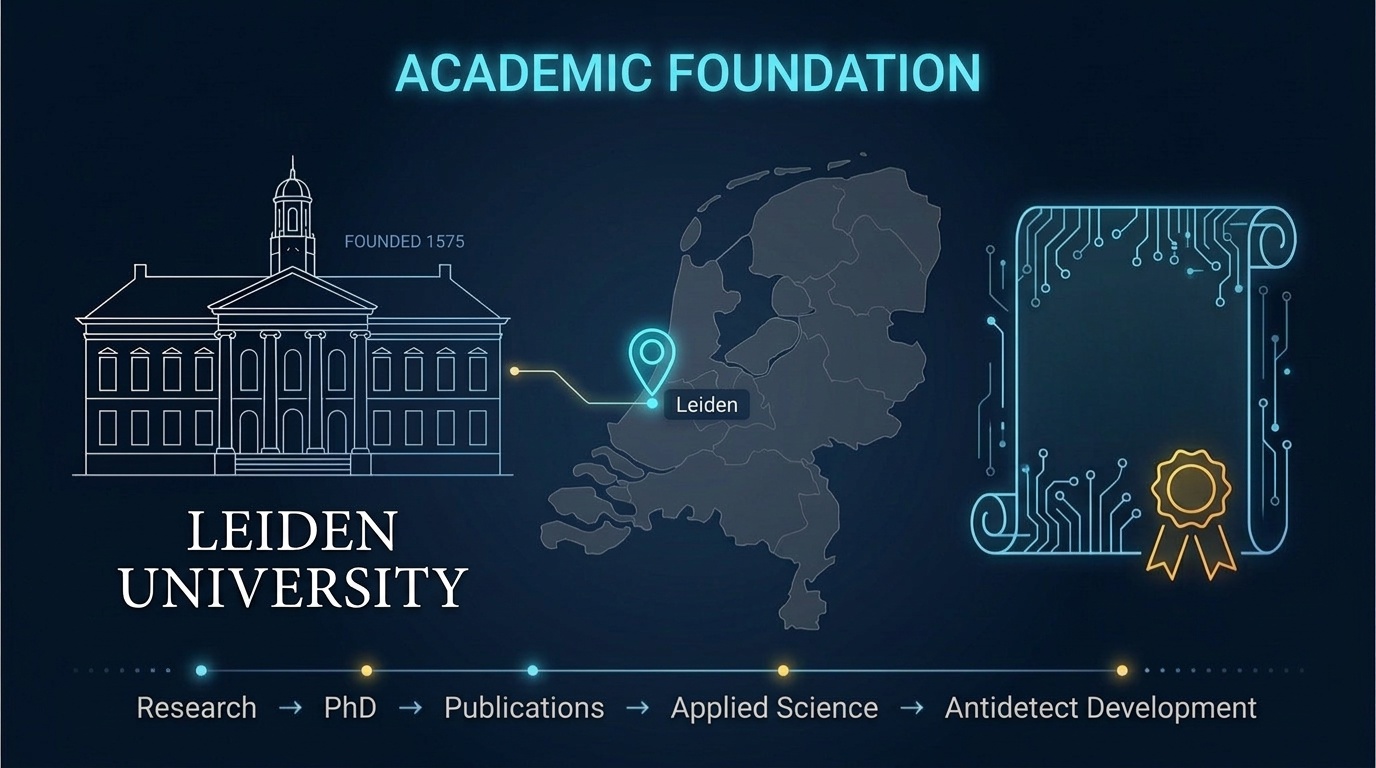
- PhD — Leiden University (Netherlands) — one of the oldest and most prestigious universities in Europe
The doctoral program at Leiden University allowed combining applied technologies with academic research at the intersection of cybersecurity and analytics.
Technical Background
Professional training was formed from the late 1990s to early 2000s and included systematic study of:
- QBasic, Turbo Pascal, Delphi — programming fundamentals
- C, Fortran, Assembler — low-level development
- JavaScript — client-server interaction
This experience is not just resume lines. Understanding how systems work at the CPU and memory level is what distinguishes the Vektor T13 approach from superficial solutions that only work with the browser's JavaScript layer.
International Conferences
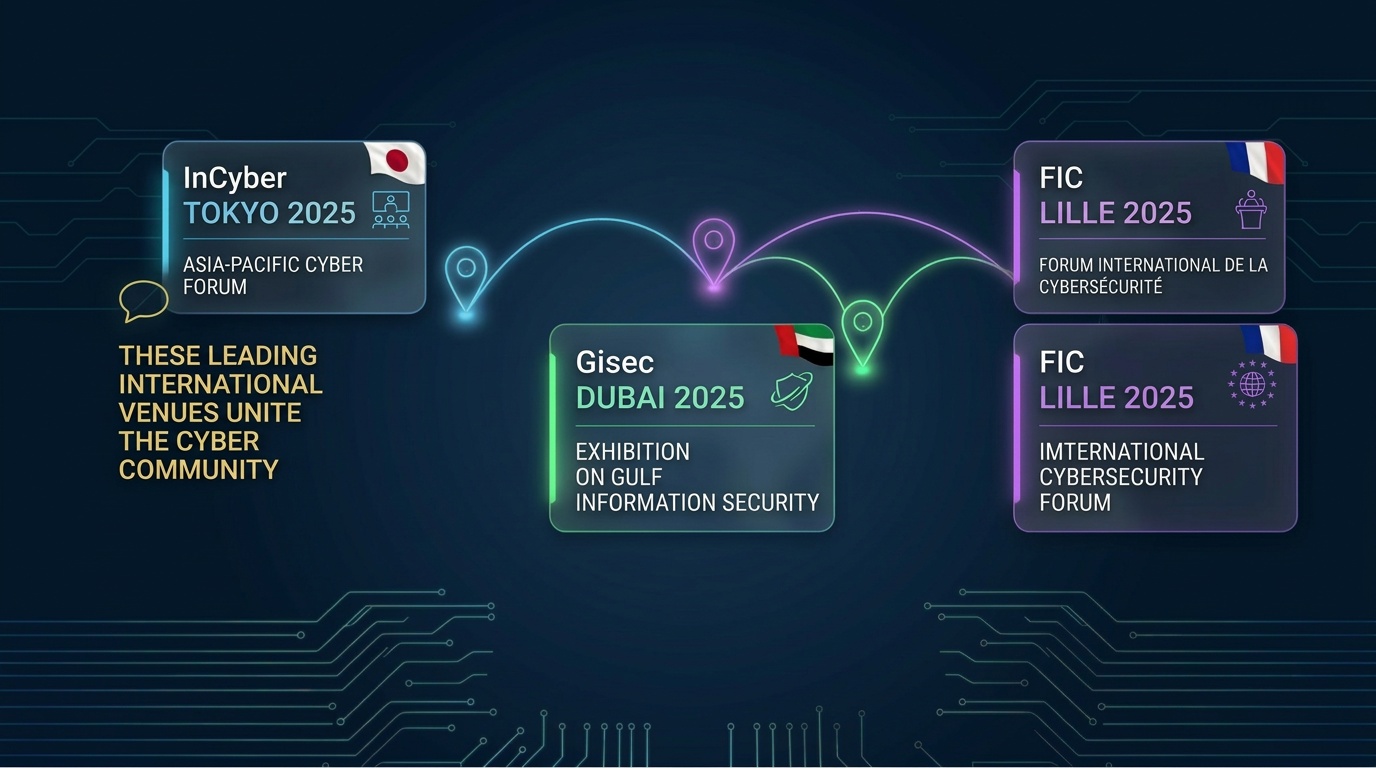
In 2025, Dmytro Momot spoke at key global cybersecurity venues:
- InCyber Forum Tokyo — one of the largest conferences in the Asia-Pacific region
- GiSec Dubai 2025 — the main information security event in the Middle East
- FIC Lille — International Cybersecurity Forum in Europe
Participation in these events is not a PR stunt but a reflection of real experience working with global challenges in information security.
Recognition and Ratings
- Forbes Choice — recognized as a significant project in cybersecurity
- Trustpilot 4.7 — high user rating based on real reviews
- 90+ free webinars — the largest educational base in the antidetect niche
Why This Matters: A Project with a Face vs. an Anonymous Product
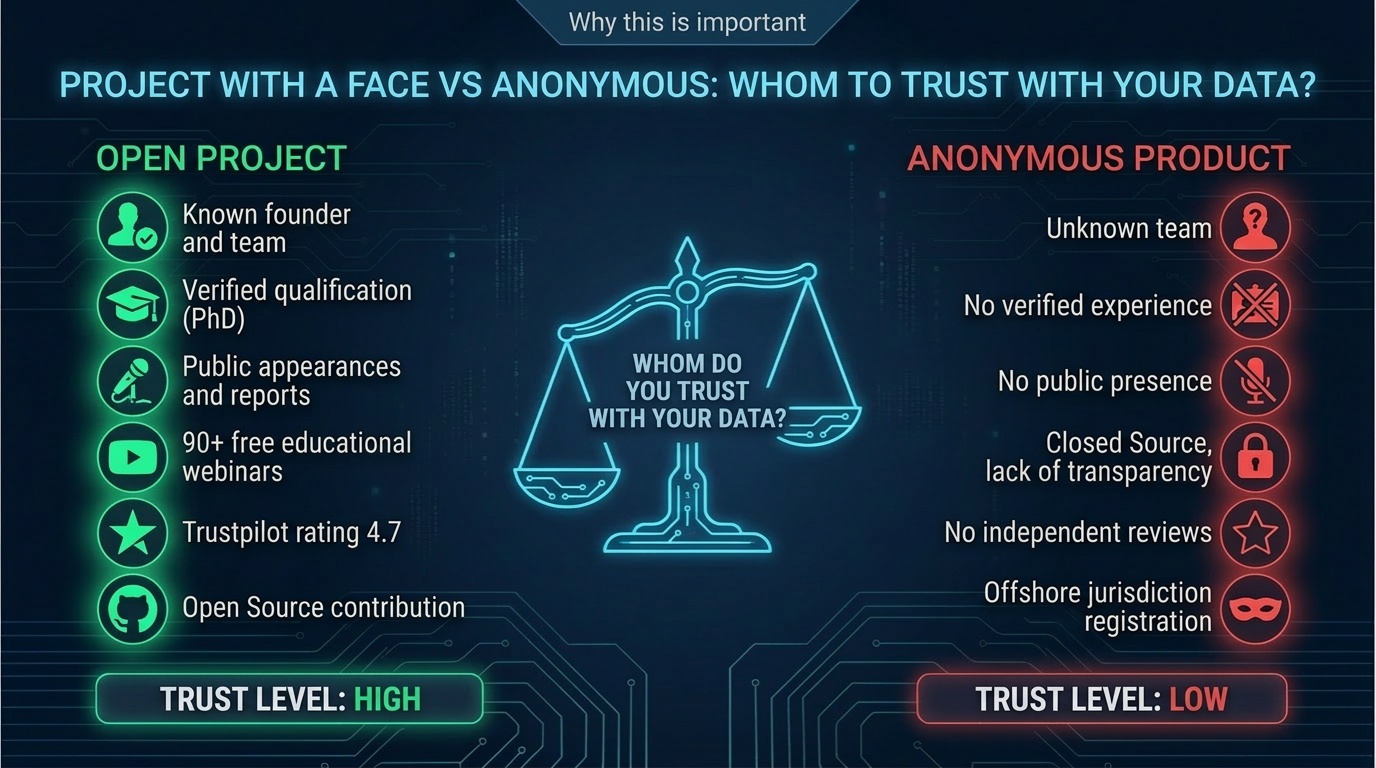
The antidetect browser market is flooded with tools backed by no specific people. Users trust their accounts, data, and money to a product — but don't know who created it or what expertise stands behind it.
Vektor T13 is the opposite approach:
- Real biography — education, scientific work, public speaking
- 17 years in the field — not yesterday's startup, but accumulated experience
- Open content — free webinars, open source, transparency
- Academic foundation — PhD Leiden University, research work
- International recognition — conferences, Forbes Choice, Trustpilot
When you choose antidetect, you're choosing not just software — you're choosing the team and expertise behind it. In the case of Detect Expert, this expertise is verifiable, public, and accumulated over nearly two decades.
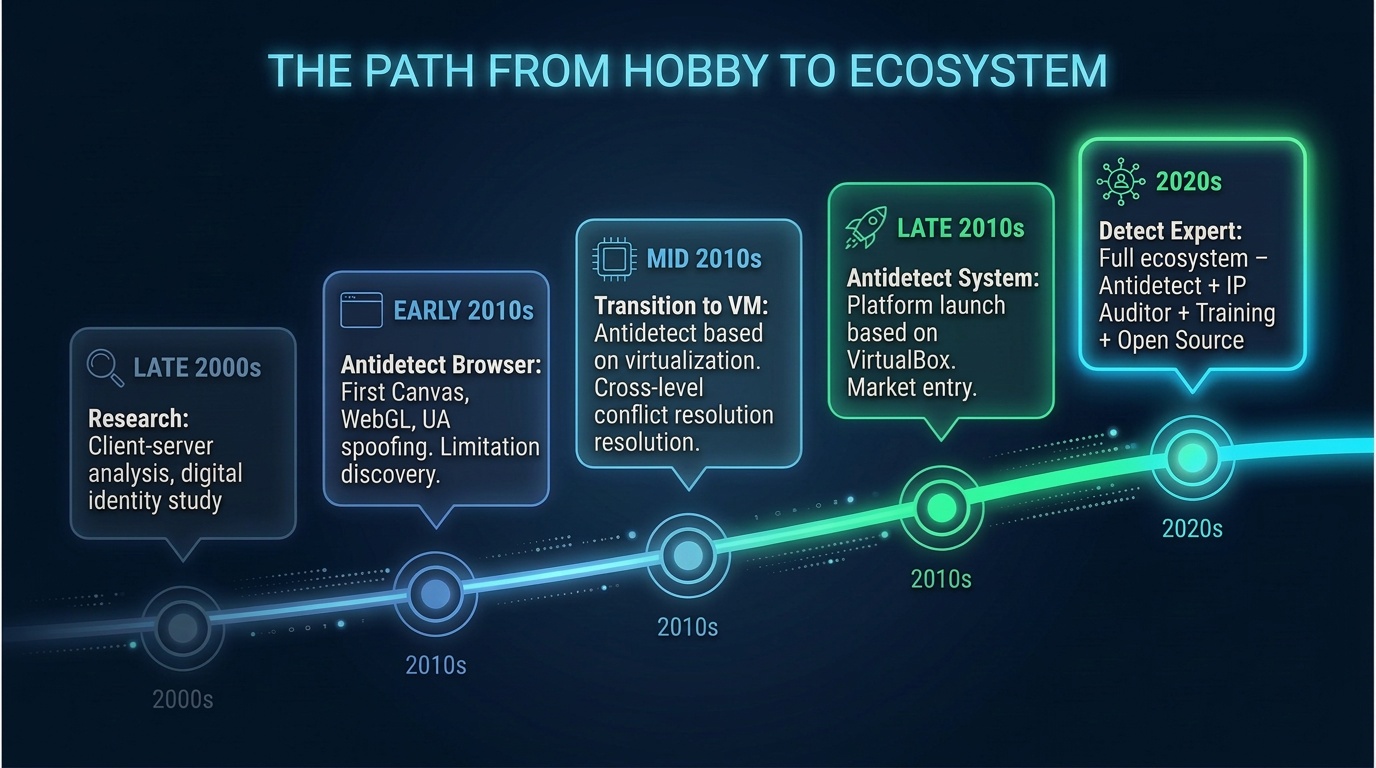
Project Timeline: From First Experiments to Ecosystem
| Period | Stage | What Happened |
|---|---|---|
| Late 2000s | Research | Client-server system analysis, studying digital identification mechanisms |
| Early 2010s | Browser Antidetect | First solutions: Canvas, WebGL, User-Agent spoofing. Identifying limitations |
| Mid 2010s | Transition to VM | Developing virtualization-based antidetect. Solving cross-layer conflicts |
| Late 2010s | Antidetect System | Launching the VirtualBox-based platform. Market entry |
| 2020s | Detect Expert | Ecosystem: antidetect + IP Auditor + education + open source |
| 2025 | International Recognition | InCyber Tokyo, GiSec Dubai, FIC Lille. Forbes Choice. 90+ webinars |
FAQ: Common Questions About Vektor T13 and Detect Expert
Who is Vektor T13? Vektor T13 is the pseudonym of Dmytro Momot, founder and CEO of Detect Expert. A specialist with 17 years of experience in cybersecurity, anti-fraud system analysis, and digital anonymity. He holds a PhD from Leiden University (Netherlands) and regularly speaks at international conferences.
How is Detect Expert different from regular antidetect browsers? Regular antidetect browsers spoof fingerprints at the JavaScript level inside the browser. Detect Expert uses virtualization, creating full isolated environments where all layers — from OS to network parameters — generate consistent data. Additionally, the ecosystem includes IP Auditor for network risk analysis and educational materials.
Is there a free version of Detect Expert? Yes. Unlike most commercial solutions in the niche, Detect Expert provides a free version for getting acquainted with the platform and basic tasks. Some components are available as open source. Over 90 free webinars are also published on the site.
Why is VM antidetect considered more reliable than browser-based? Modern anti-fraud systems check not only the browser but also the OS, hardware parameters, fonts, and drivers. Browser antidetect doesn't control these layers, creating conflicts. VM antidetect builds the environment from scratch, ensuring consistency of all parameters.
Conclusion
The Vektor T13 story is not a startup story about finding a niche and growing quickly on marketing. It's 17 years of consistent development: from first experiments with browser fingerprints to a full ecosystem including virtualization-based antidetect, network analysis tools, and the largest educational base in the niche.
Dmytro Momot is one of the few experts in this field whose qualifications are confirmed academically (PhD Leiden University), professionally (InCyber, GiSec, FIC conferences), and practically (17 years of development, 90+ webinars, Trustpilot 4.7).
If you're looking for an antidetect solution backed by real expertise, not just marketing — discover Detect Expert.
VM-based antidetect. 300,000+ unique identity combos. Free edition available.
